

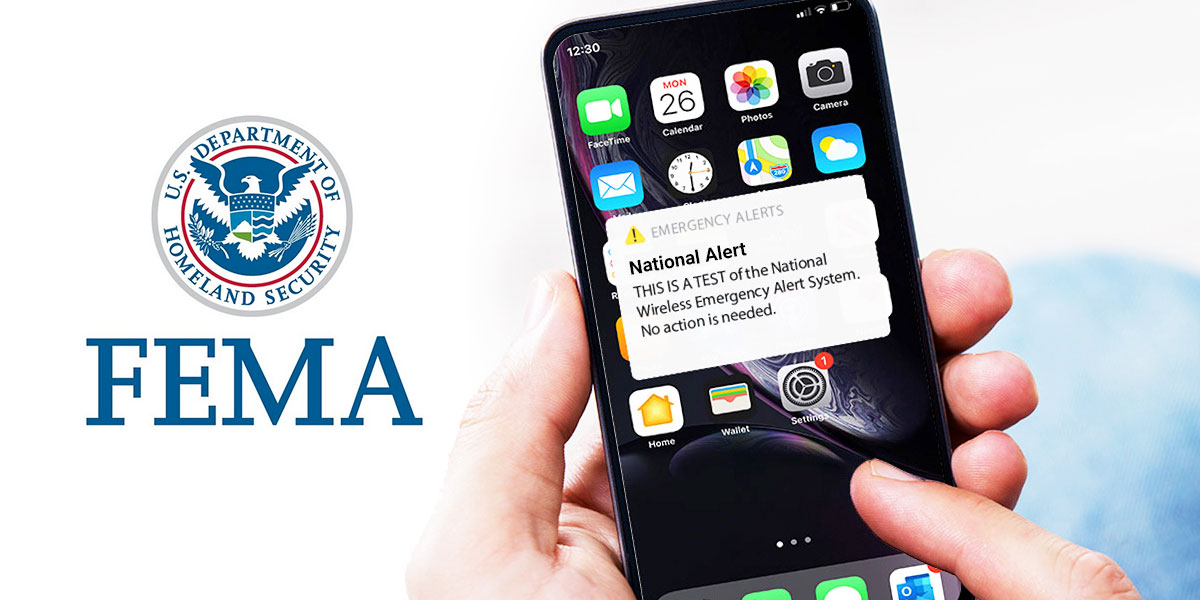

Cloud-Tested Alerting: Previewing Wireless Emergency Alerts Before They Go Live

Executive Summary
When seconds matter, accuracy matters more. Working with FEMA’s Integrated Public Alert and Warning System (IPAWS), this demonstration application enables alerting authorities (AAs) to preview Wireless Emergency Alerts (WEA) before they reach the public. The goal: reduce human error, improve local relevance, and strengthen trust in emergency communications—without slowing response.
Background: IPAWS & WEA
Established to protect public safety, IPAWS allows thousands of federal, state, local, tribal, and territorial alerting authorities to deliver critical warnings through multiple channels, including the Emergency Alert System (EAS) and Wireless Emergency Alerts (WEA). WEA broadcasts from cell towers to WEA-enabled devices, ensuring wide, fast reach during crises.
The challenge: Even with strong systems, alert workflow gaps can lead to misfires. A pre-broadcast preview provides a crucial last check—validating content, geo-targeting, and event-code selection—before a message becomes public.
Why Preview Before Broadcast
High-profile alert errors in recent years underscored how vital accuracy is to public safety. In response, policy and oversight strengthened the alert ecosystem, and stakeholders sought practical tooling to validate messages before they go live. The demonstration app was designed to help AAs:
-
Preview message content and geo-targets for clarity and precision.
-
Validate event codes against local use cases and policies.
-
Reduce risk of erroneous or ambiguous alerts under time pressure.
Solution Overview
The WEA Preview Demonstration Application introduces a structured, auditable pre-broadcast step in the alert workflow. It supports AAs with:
-
Human-in-the-loop confirmation prior to transmission.
-
Policy-aligned defaults that reflect each authority’s operational context.
-
Transparent telemetry and history to inform training and continuous improvement.
This approach preserves speed while adding confidence—accuracy without delay.
Key Features
1) Message Preview & Validation
-
Live preview of alert copy, geo-target, and display format as recipients would see it.
-
Validation checks for required fields, length limits, and clarity cues.
2) Event Code Tailoring
-
Configurable to show only relevant event codes for each AA’s operations, streamlining the selection process and reducing cognitive load.
3) Real-Time Monitoring & History
-
Monitoring panel for alert status and delivery feedback (where available).
-
History view for previous alerts, aiding training, review, and process refinement.
4) Role-Based Access & Audit
-
Authentication, roles, and audit trails for who drafted, reviewed, and approved a message—supporting oversight and after-action analysis.
Collaboration & Delivery
The demonstration application was developed in close coordination with FEMA IPAWS, with collaboration from partners at Consolidated Analysis Center, Inc. (CACI). Stakeholder interviews and iterative feedback ensured the tool reflects real operator needs while aligning with program goals and policies.
Impact
-
Accuracy: Gives alerting authorities a final confidence check, reducing the risk of misfires.
-
Relevance: Encourages locally appropriate event-code choices and message copy.
-
Trust: Adds transparency and auditability to an essential public-safety workflow.
-
Readiness: History and monitoring views support training and continuous improvement.
Key Points (At a Glance)
-
What it is: A preview application for WEA messages, integrated with IPAWS alert workflows.
-
Who it helps: Alerting authorities who must act fast—without compromising accuracy.
-
Why it matters: Improves precision, oversight, and trust in public alerts during crises.
-
How it works: Message preview, event-code tailoring, real-time monitoring, and auditable approvals.